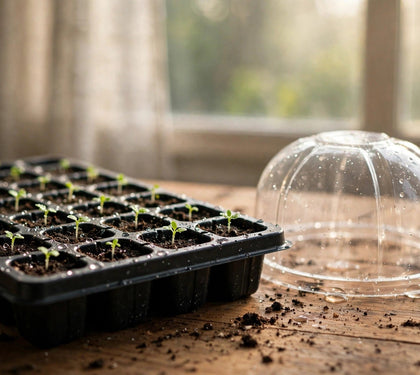


There's a thief going around the growing world that doesn't eat leaves, doesn't leave webs, and doesn't show up in your IPM scouting — because by the time you can see it, it's been living in your garden for months. It's called hop latent viroid, HLVD for short, and it's the single most important thing a clone buyer can understand in 2026. Not the scariest thing to read about — but the most valuable, because HLVD is almost entirely preventable with information and a few habits.
This guide covers what HLVD is, how it actually spreads (and how it doesn't), the symptoms to watch for, and the quarantine and sanitation protocol we recommend to every customer who brings new genetics home. Whether you buy clones, trade cuts with friends, or keep mother plants for years, this is the page to read first.
What HLVD is, in plain terms
A viroid is not a virus, a fungus, or a bacteria — it's smaller and stranger than all of them: a tiny loop of bare RNA with no protein coat, no metabolism of its own, nothing to poison or starve. It gets inside plant cells and hijacks them into making more copies of itself. "Hop latent" is the giveaway in the name: it was first identified in hops, and latent means it can ride inside a plant showing no visible symptoms at all — sometimes for a long time — while that plant quietly infects everything it touches.
Because there's no organism to kill, there is no cure. No spray, no systemic, no root drench removes a viroid from an infected plant. That sentence sounds bleak, but it clarifies the whole strategy: with HLVD, everything is prevention, detection, and discipline. The growers who beat it never have to fight it.
What infection actually does to a plant
When symptoms do show — and they often appear under stress, in flower, or in a plant that's been carrying the viroid a while — growers describe a pattern experienced hands call dudding:
- Loss of vigor. Plants grow slower, stack less, and finish lighter than the same genetics should. Yields on infected stock are commonly reported down 30–50%.
- Weak, brittle stems that snap instead of bending, especially on laterals.
- Horizontal, sideways branch growth instead of strong upward structure.
- Smaller, muted leaves, sometimes with subtle mottling — easy to mistake for a feed problem.
- Flat flower quality. The harvest looks like a lesser version of the cultivar: reduced aroma, reduced stickiness, reduced everything. Growers blame their lights, their food, their water — everything except the plant itself.
That last point is why HLVD spread so far before the industry woke up: an infected garden doesn't die dramatically. It just underperforms, forever, while the grower upgrades every input trying to fix a problem that arrived inside the genetics. If a cut you used to love "isn't what it used to be," this is a question worth asking.
How it spreads — and how it doesn't
| Route | Risk | What controls it |
|---|---|---|
| Shared cutting tools (razors, scissors, scalpel blades) | The #1 route. Sap on a blade carries viroid from plant to plant | One blade per plant, or disinfect between every plant — no exceptions |
| Infected mother → her clones | Certain. Every cut from an infected mother is infected | Test mothers; a clean mother is the whole ballgame |
| Hands, gloves, and handling | Real. Sap transfers on skin and gloves after pruning or defoliating | Gloves changed or hands washed between plants during heavy work |
| Root contact / shared runoff in tight systems | Documented. Roots touching or sharing drainage can pass it | Spacing, individual runoff, no communal flood trays for quarantine stock |
| Seed | Low but not zero — transmission through seed has been reported at low rates | Seed-grown plants are far lower risk than clones, not no risk |
| Insects and airborne spread | Not a meaningful route | Your IPM program doesn't cover HLVD; your sanitation program does |
Read that table once and the picture snaps into focus: HLVD travels on blades and in sap, from plant tissue to plant tissue. It's a workshop-hygiene disease, not a weather disease. Which is good news — hygiene is entirely within your control.
The testing question: PCR or it didn't happen
Because latent plants look perfectly healthy, eyes can't clear a plant — only a lab test can. The standard is a PCR test, run on leaf and ideally root tissue (viroid concentration varies through the plant, and root samples catch infections leaf samples miss). Testing is done by agricultural labs via mail-in samples, and reputable clone sellers test their mothers and batches on a schedule and will show you results dated recently, tied to the actual stock you're buying.
When you're buying clones from anyone — a nursery, a friend, a guy on the internet — here are the questions that separate serious sellers from hopeful ones:
- "Do you test for HLVD, and how often?" (A real answer names a cadence — every 6–8 weeks per mother is the professional pattern.)
- "Can I see the results for the mother of this cut?" (Recent, dated, and specific beats a logo on a website.)
- "Do you test leaf and root tissue, or leaf only?"
- "What happens if a plant I bought tests positive later?"
A seller who welcomes those questions is a seller with answers. A seller who gets offended is an answer too. When we bring clone genetics to our own customers, tested and documented is the bar — it's the only way this category of product deserves trust, and it's why this guide exists on our site at all. Everything for the propagation bench itself — domes, plugs, scalpels, rooting solutions — is in our Propagation collection.
The quarantine protocol: new plants enter like they owe you proof
Even from a tested source, every new plant that enters your garden should pass through quarantine. Tests have detection limits, samples get mixed up, and the cost of discipline is two weeks of shelf space. The cost of skipping it can be your whole mother library. Here's the protocol, step by step:
- A separate space. A small tent, a shelf with its own light, a spare bathroom — physically away from your main garden, with its own tools that never travel back and forth.
- Two full weeks minimum in quarantine, growing actively. A dormant, stalled plant tells you nothing; you want new growth to observe.
- Inspect like a skeptic. Watch for the dudding pattern: brittle stems, sideways growth, weak vigor compared to what the genetics should do. Check roots too — healthy new plants root eagerly.
- Test the plants you care about most. Anything destined to become a mother gets a PCR test during quarantine, full stop. One test is cheap insurance on a plant you'll clone for years.
- Work quarantine last. On any garden day, tend your established plants first and quarantine stock last, then wash hands and change gloves. Never carry tools from quarantine back to the main room mid-session.
- Only then do they graduate — into the main space, with a note in your log of what came in, from where, and when. If something ever goes wrong later, that log is how you trace it.
Sanitation on the bench: the habits that actually stop it
You don't need a laboratory. You need a routine, performed the same way every time:
- One blade per plant when taking cuts. Single-edge razor blades are cheap. A mother's entire clone line is not. Use a fresh blade per mother, or disinfect between plants without exception.
- Disinfect tools properly. A 10% bleach solution (freshly mixed) with real contact time — a quick dip-and-go doesn't count; a minute of contact does. Quaternary ammonium disinfectants and purpose-made tool sanitizers also work; alcohol alone is the weakest option against viroids and shouldn't be your only line.
- No communal dunk tanks. Cuttings from different mothers soaking in one shared cup of water is a sap exchange program. Separate containers per source plant.
- Prune healthy first, suspicious never. If a plant looks off, it gets worked last with dedicated tools, or not worked at all until it's tested.
- Clean the space between runs. Surfaces, trays, and dome lids washed down between batches — viroid in dried sap on a dirty tray is still a risk to the next batch of cuts sitting in it.
All of it — blades, disinfectants, domes, plugs, individual cells — is propagation-bench basics, stocked in Propagation and the seedling bench supplies at the shop. The total cost of doing this right is a few dollars a run. The cost of the alternative is a genetic library.
If you get a positive test
It happens to careful people. The response is unsentimental:
- Quarantine the plant immediately if it isn't already, bag it where it stands, and remove it. Infected plants get destroyed — bagged and trashed, never composted, never "kept to see." There's no recovery to wait for.
- Test its neighbors — anything that shared tools, trays, runoff, or a mother with the positive plant.
- Review the log. Where did it come from, what else arrived in that batch, which tools touched what. This is the day the entry log pays for itself.
- Rebuild from clean stock. Seed runs, tested replacements, or tissue-culture-cleaned genetics (specialist labs can clean valuable infected cultivars — the one legitimate route back for a keeper you can't replace).
Then keep going. A garden that tests is a garden that finds things — and finding it is what separates a bad month from a bad decade.
Anthony's Take: “Getting a clone dramatically cuts down the time and effort of starting a garden or a new harvest — but most people skip the essential quarantine period, where you can catch a lot of issues before they ever hit your garden!”
Frequently asked questions
Can I see HLVD with the naked eye?
Sometimes, eventually — the dudding pattern is visible in a plant that's been infected and stressed for a while. But latent plants show nothing, sometimes for the entire time they're quietly infecting your tools' other work. Eyes are for suspicion. Only PCR is for answers.
Is testing worth it for a small home grower, or is that facility stuff?
Scale the effort to what you'd lose. If you keep mothers and clone your own genetics season after season, one round of mother tests protects years of work — worth it at any size. If you grow from seed each run and flower everything out, your risk is naturally low and quarantine-by-observation may be proportionate. The expensive version of HLVD is always the one where irreplaceable genetics were never tested.
Does HLVD affect anything besides the one plant type everyone talks about?
It came from hops, and it infects a range of related and unrelated crops — tomato and pepper growers deal with viroids of their own. For a home grower the practical point is simpler: don't share tools between your garden projects carelessly, and don't assume a plant is clean because it's a different species.
My friend has given me cuts for years with no problems. Am I overthinking this?
Maybe his stock is clean — plenty is. But "no visible problems" is precisely what latency looks like, and the classic infection story is a long-trusted source plus one new outside cut introduced upstream. Testing his mother once protects both of you. Frame it that way — it's a favor, not an accusation.
Can an infected plant be saved with tissue culture?
Yes — meristem tissue culture performed by a competent lab can eliminate the viroid, because the growing tip often carries little or no infection. It's a specialist service and priced like one, so it's for genetics worth saving, not for replaceable stock. For everything else: test, cull, replace with clean.
Bringing new genetics home soon, or worried about stock you already have? Come talk it through at the shop — 82 Newbury St in Peabody. We'll walk you through the quarantine setup with what's on the Propagation shelf, and tell you honestly what we'd test first if it were our garden.